
Fire ants range from 2 to 6 mm in size and they’re notorious for their painful bites. There are two main groups of these ants, including native and imported, and both of them are aggressive.
The imported fire ants are further divided into two categories, including RIFAs (Red Imported Fire Ants) or Solenopsis Invicta, and BIFAs (Black Imported Fire Ants) or Solenopsis Richteri. Whereas, there are several native fire ant species in the US, such as the tropical fire ant, desert fire ant, and southern fire ant.
Imported fire ants are usually found in the southern and native species prefer to live in the Southwestern United States. The native fire ants are found in northern Mexico.
If you live in these parts of the United States, it’s important to know what type of environment fire ants prefer. It’ll help you figure out whether or not these aggressive insects are hiding out in your outdoor area to get rid of them and prevent further fire ant infestations.
Where Do Fire Ants Live?
The imported fire ants were accidentally introduced into the United States through the Mobile, Alabama port in the 1930s. These opportunistic insects need food sources and a moist and warm environment to survive. That’s why they’re commonly found in the Southern United States.
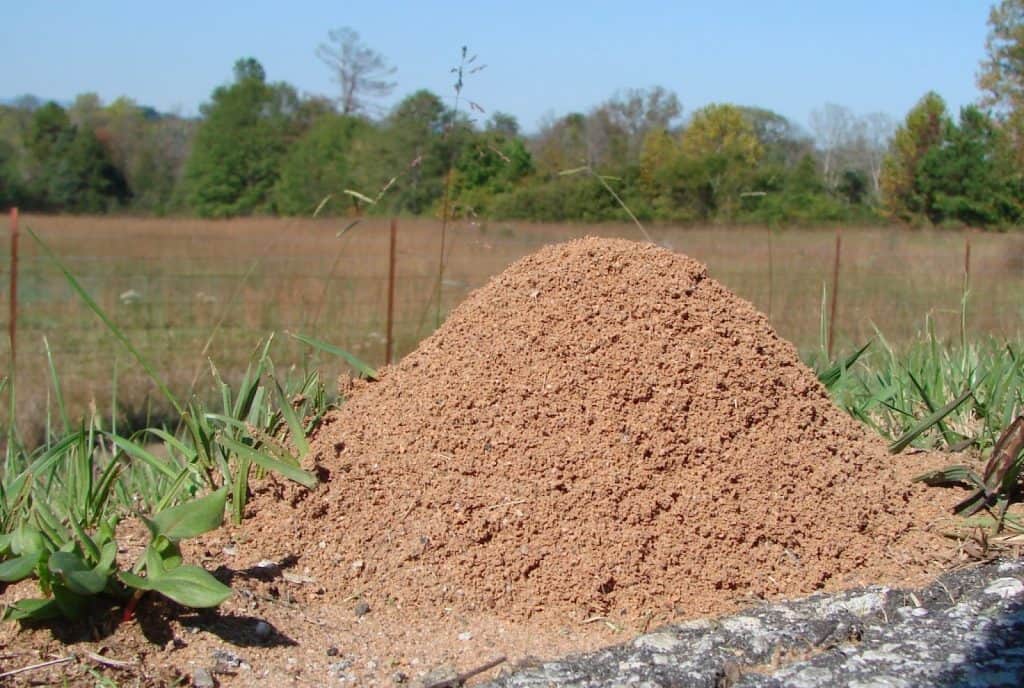
They build nests in soil with irregular shapes and you’ll often find them in open areas like near trees in your yard. Unlike mounds of most ants, fire ant nests don’t have an opening right in the middle and they enter and exit the mound using underground tunnels.
They have reddish hues that can give a variety of different shades ranging from copper to black. The size of worker ants ranges from 2 to 6 mm but the queen of the nest can be up to 25 mm long.
States with Fire Ants Populations
According to the Ant Pests Organization, both black and red imported fire ant species are found in the following states of the country.
- Virginia
- Texas
- Tennessee
- South Carolina
- North Carolina
- Oklahoma
- New Mexico
- Mississippi
- Louisiana
- Georgia
- Florida
- California
- Arkansas
- Alabama
Other than these states, people have also spotted fire ant populations in Maryland, Missouri, and Kentucky.
Most native fire ant species are found in the southwestern United States, as well as, northern Mexico.
Fire Ant Mounds
Just like most ant species, native and imported fire ant mounds can be found in any type of soil. These ants prefer sunny and open areas, such as playgrounds, backyards, parks, pastures, and meadows to build their nests.
The size of fire ant mounds can range from 18 to 30 inches and they don’t feature any entry holes. It’s important to note that the mound isn’t necessary for the entire fire ant colony to survive. During extremely dry or hot weather, these ants go deep into the ground through tunnels to survive.
Fire Ant Colonies
A single fire ant colony can have one or multiple queens. A colony with a single queen is typically territorial in nature and can have 40 to 150 mounds with up to 7 million ants in an acre.
Whereas colonies with multiple queens can have up to 300 mounds in a single acre with up to 40 million worker ants. If a colony is destroyed but the queen survives, it’ll start a new colony with the help of only six worker ants, several hundred meters away from the previous location.
Fire Ant Behaviors
As mentioned, fire ants are extremely aggressive and can kill small animals and other insects to protect their colony. Regardless of the size of the animal, these insects sting (and sting hard) anyone who enters their territory.
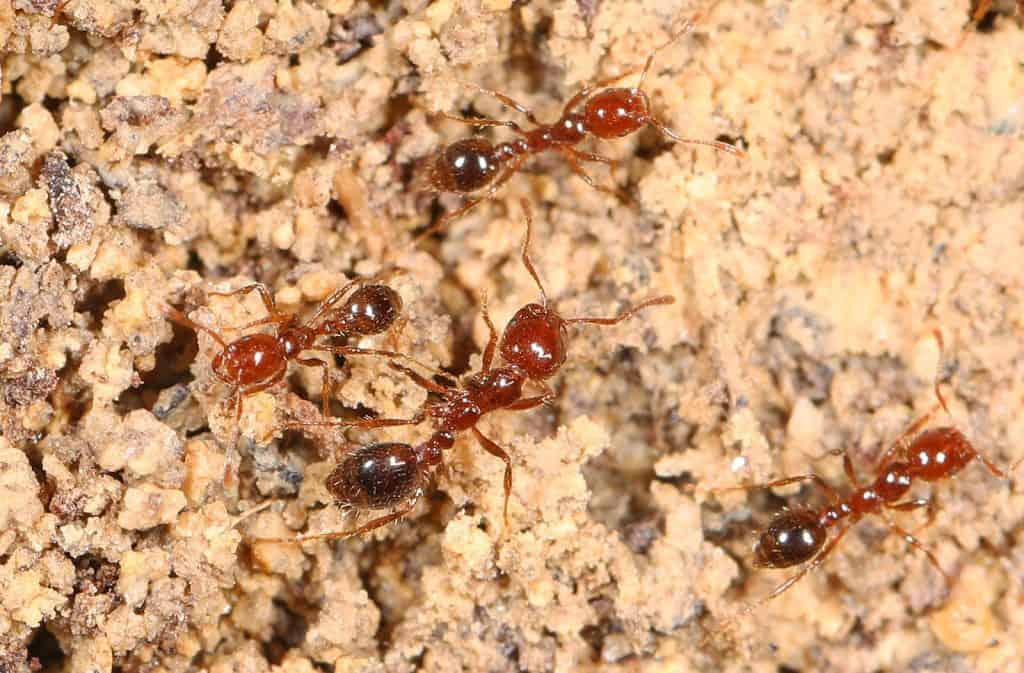
Keep in mind that fire ants bite only when they’re threatened or disturbed. People who enter the territory of fire ants or disturb their mound usually fall victim to fire ant stings.
The most common reactions that a fire ant bite can cause include pustules, irritation, and pain. However, particularly sensitive individuals can also experience a severe allergic reaction and it can cause serious swelling, loss of breath, sweating, nausea, and chest pain.
These dreaded insects can also bite when they’re foraging for food. From litter and debris left by humans to sweet secretions of plants, fire ants can eat everything.
Fire Ant Life Cycle
Just like most insects, the queen of the nest lays eggs that turn into grub-like larvae after hatching. Then they undergo the development stage, which lasts for four days.
After that, the larvae become pupae, which resemble adult fire ants. However, they’re still whitish at this stage and not fully mobile, and need further development to molt into adults.
Most larvae of fire ants become workers, females without wings, but some of them become large-winged males or reproductive female adults. These winged males and females mate for further reproduction.
The males die soon after and the females lose their wings and turn into queens. They dig into the ground to start laying eggs, and the cycle repeats.
For more information, see How Long Do Fire Ants Live: Fire Ant Life Cycle.
Fire Ant Feeding
Fire ants are omnivorous and they can eat a vast array of vertebrates (mammals, birds, and reptiles), invertebrates like arthropods, microscopic organisms, and plants.
Workers scavenge for food in the morning and evening and carry the food back to the nest to share it with the entire colony.
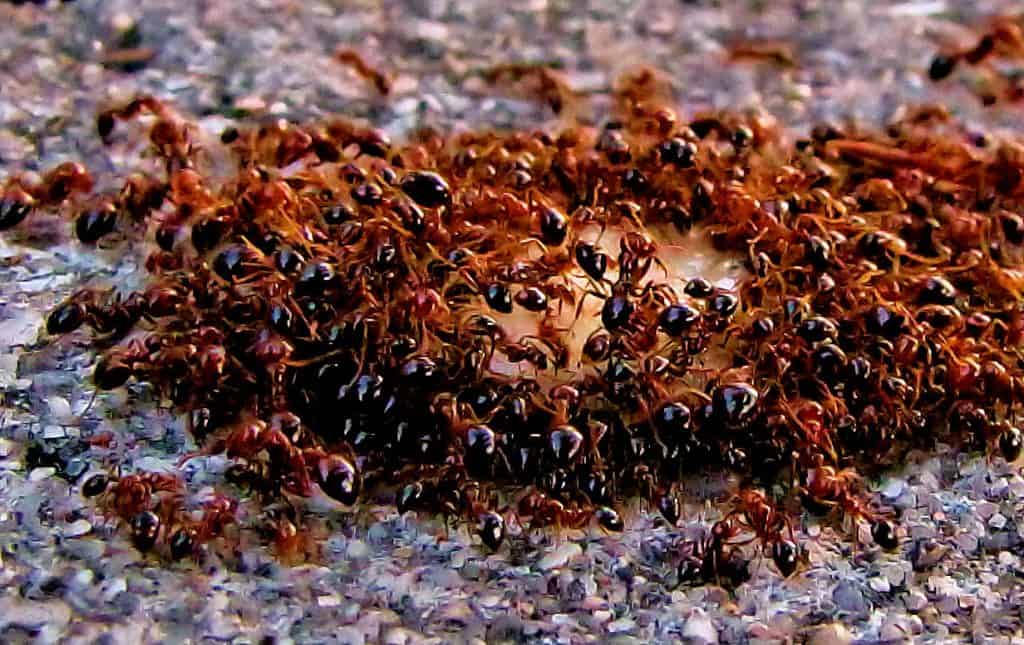
These insects can eat pretty much everything that contains protein. It includes caterpillars, grasshoppers, moths, fly larvae, dead insects, and even other ant species. However, there are some organisms, such as parasitic nematodes and predaceous mites, that kill fire ants.
FAQs About Where Do Fire Ants Live
Which States Have the Most Fire Ants?
According to the Ant Pests Organization, Virginia, Texas, Tennessee, South Carolina, North Carolina, Oklahoma, New Mexico, Mississippi, Louisiana, Georgia, Florida, California, Arkansas, and Alabama are the states with the most fire ants.
What Do Fire Ants Prefer to Love?
Fire Ants prefer moist environments and prefer to build their mounds in open areas. They choose places to build their nests where they can easily find food. From litter and debris left by humans and plants to insects and mammals, they can eat everything.
Final Words
Knowing where fire ants live and what type of climate they prefer, can help you determine if there’s a fire ant infestation on your property. If you live in any of the states, mentioned above, consider inspecting your outdoor area for fire ant activity.
If you have a fire ant infestation, use appropriate methods to get rid of them to protect yourself and your family from these dreaded insects.
Recommended Reading: