
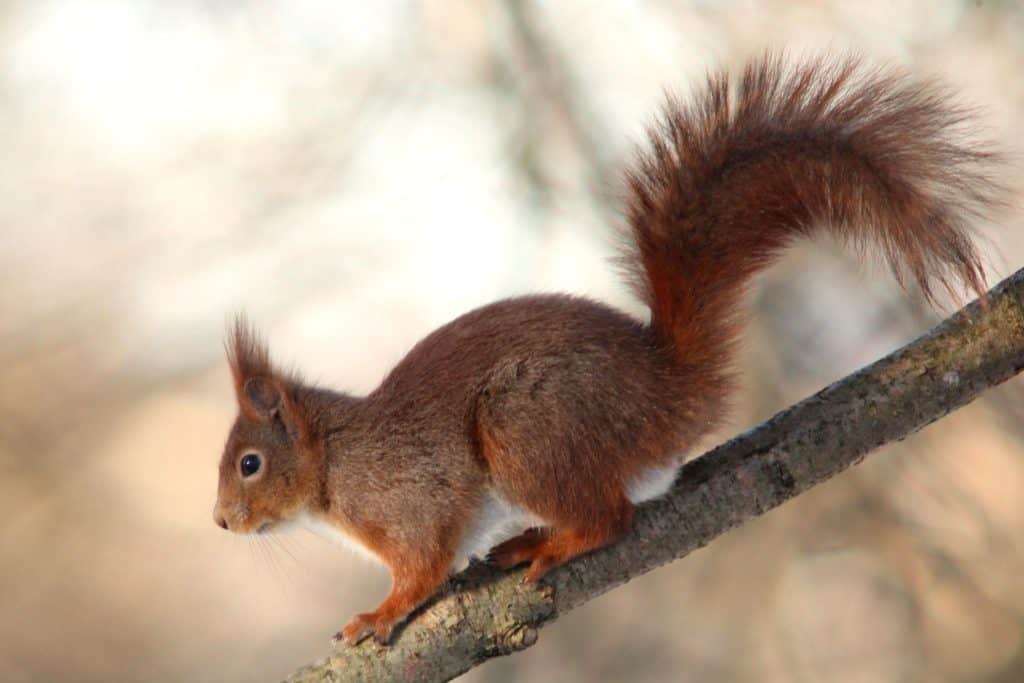
You can easily recognize the popular American red squirrels by their bushy, dark red tail with hints of a white outline.
Also, these squirrels have a thick, white circle around their black eyes, a white stomach, and a grayish, red, or rust-colored coat.
You can see the American red squirrel across the US. They live in the forests of Alaska, the Rocky Mountains, and the east coast north of Georgia because they love coniferous forests.
If you’re a fan of the American red squirrels, you’re lucky; today’s article contains a lot of information about the red squirrel population, so let’s jump right in.
Where Do Red Squirrels Live?
This type of tree squirrel lives in the Rocky Mountains, southern and central Canada, parts of Alaska, the northeastern US, and the Great Lakes region.
The number of red squirrels has recently dropped in Great Britain, Italy, and Ireland because of the introduction of the eastern grey squirrel populations from North America.
In the United States, they can be found in several states, including:
- Alaska
- Arizona
- California
- Iowa
- Colorado
- Connecticut
- Idaho
- Illinois
- Indiana
- Maine
- Kansas
- Michigan
- Massachusetts
- Kentucky
- Maryland
- Minnesota
- Nevada
- Missouri
- Montana
- Nebraska
- New Hampshire
- New Mexico
- North Dakota
- New Jersey
- Ohio
- Oregon
- New York
- Pennsylvania
- Rhode Island
- South Dakota
- Tennessee
- Vermont
- Virginia
- Washington
- West Virginia
- Wisconsin
- Wyoming
They are most commonly found in the northern and western parts of the United States but also in some southern states.
If you want to see red squirrels, it’s a good idea to visit a park or nature reserve in one of the states listed above and keep an eye out for their distinctive reddish-brown fur and bushy tails.
The red squirrels tend to be active during the day, so you have a good chance of seeing one.
Is it Rare to See a Red Squirrel?
There aren’t major threats to the red squirrels at a global scale.
Locally, they can suffer from habitat loss and fragmentation, pet trade, overhunting, and competition with introduced species, like the eastern grey squirrels in Italy and Britain.
The IUCN suggests that red squirrels aren’t endangered. They’re pretty common across most of their range.
In the UK, their number has drastically reduced because of the introduced grey squirrels. Less than 140,000 were assumed to exist in 2013, mainly in Scotland.
The number of red squirrels goes down constantly, but they’re not endangered. They’re classified as Least Concern (LC) on the IUCN red list. Therefore, it’s not rare to see a red squirrel.
Is the Red Squirrel Endangered?
Red squirrels aren’t considered endangered globally. However, their populations have declined in some areas because of habitat loss and competition with newly introduced species, such as the non-native grey squirrel.
Grey squirrels can out-compete red squirrels for resources and have been known to carry a virus that is lethal to red squirrels.
In some parts of the UK and Ireland, red squirrel populations have been heavily impacted by these factors. So, they’re considered endangered or vulnerable in those areas.
Preserving red squirrel habitats is important to protect red squirrels. You can learn more about protecting these squirrels from organizations such as Saving Scotland’s red squirrels.
What is the Habitat of a Red Squirrel?
Red squirrels are native to North America and Eurasia’s forests and live in various habitats, including coniferous and deciduous woodlands and mixed forests.
Red squirrels are arboreal, meaning they live in trees and build nests, called dreys, in the branches or tree cavities. They usually have more than one drey. They prefer dense tree canopy and a well-developed understory of shrubs and herbaceous plants.
They’re active during the day and forage for food on the ground and in trees.
Red squirrels are adapted to living in cold climates and are found at high latitudes and altitudes. They have thick, reddish-brown fur that helps to insulate their bodies and keep them warm in the winter.
(See Where Do Squirrels Go In The Winter?)
What Do Red Squirrels Eat?
Red squirrels are omnivorous, meaning they eat both plants and animals. Their diet varies depending on the availability of food in their habitat and the time of year.
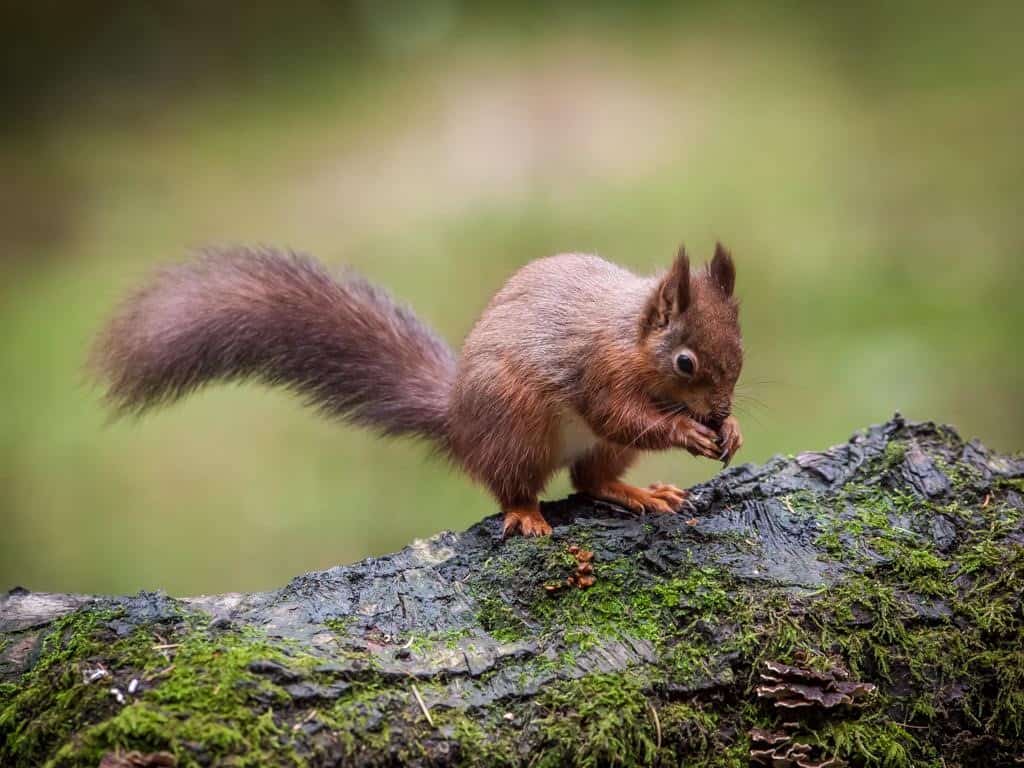
In the spring and summer, red squirrels feed on a wide variety of plant material, including flowers, leaves, shoots, and tree seeds.
They also eat insects and other small invertebrates during this time. In the fall, red squirrels focus on gathering and storing food for the winter when resources are scarce.
They eat the seeds of coniferous trees, such as pine and spruce, nuts, and berries. Red squirrels are known to cache or bury food in the ground to save for later.
They’re also opportunistic feeders and will eat a variety of other food sources when available, such as bird eggs, fungi, pine cones, and fruit.
For more information, see What Do Squirrels Eat?
How Long Do Red Squirrels Live?
The lifespan of a red squirrel in the wild is typically 3-4 years, but some individuals can live up to 9 years.
Red squirrels face many challenges in the wild, including predation, disease, and competition for resources, which can shorten their lives.
In captivity, red squirrels can live longer due to a controlled environment and access to a consistent food supply. Genetics, diet, and habitat quality can also affect a red squirrel’s lifespan.
Red squirrels have many natural predators that can threaten their survival. Some of the animals that prey on red squirrels include birds of prey, such as owls and hawks, and mammals like foxes, martens, and weasels.
Red squirrel kittens are also at risk of being killed by predators when they’re young and vulnerable. They’re preyed upon by various snakes, including garter snakes and rat snakes, as well as by larger mammals like bears and bobcats.
Red squirrels have some adaptations that help them avoid or defend against predators, such as their ability to climb trees and their sharp teeth and claws.
They’re also known to use a variety of vocalizations and body language to communicate with other squirrels and alert them to potential dangers.
Last Words
You can see the red squirrels yearly because they don’t hibernate. They’re most active during the day but don’t enjoy being out in bad weather.
Moreover, these rodents also like afternoon naps, especially during summer days.
If you live near red squirrels, you can see these small creatures racing through the trees and going up and down the tree trunks after January; the males chase after the females because it’s their mating period.
Lastly, red squirrels aren’t always bright red; you can also see pale brown, grey, or even black squirrels with tails that turn blond in summer.
However, red and grey squirrels aren’t the same. Unlike grey squirrels, red ones have ears with hairy tufts.
Recommended Reading: