
Fire ants are a constant source of annoyance for the residents of North Carolina. While the bites of these insects aren’t deadly, they can be extremely painful and can sometimes lead to serious issues. Homeowners especially find fire ants to be persistently troublesome.
Fire ants are known for their powerful and excruciating bite. They often make nests near homes with food sources or in the homes themselves. Infestation is a serious issue in North Carolina.
Home and property owners implement many measures to avoid fire ant invasions. In this article, we will discuss everything there is to know about Fire ants in North Carolina, from the intensity of their bite to precautionary measures.
Identification of Imported Fire Ants
Red imported fire ants can easily be distinguished from regular ants simply by size. Fire ants have a more reddish-brown tint and long and visible antennas than the other two. North Carolina is home to various other species, such as the Carpenter and Formic ants.
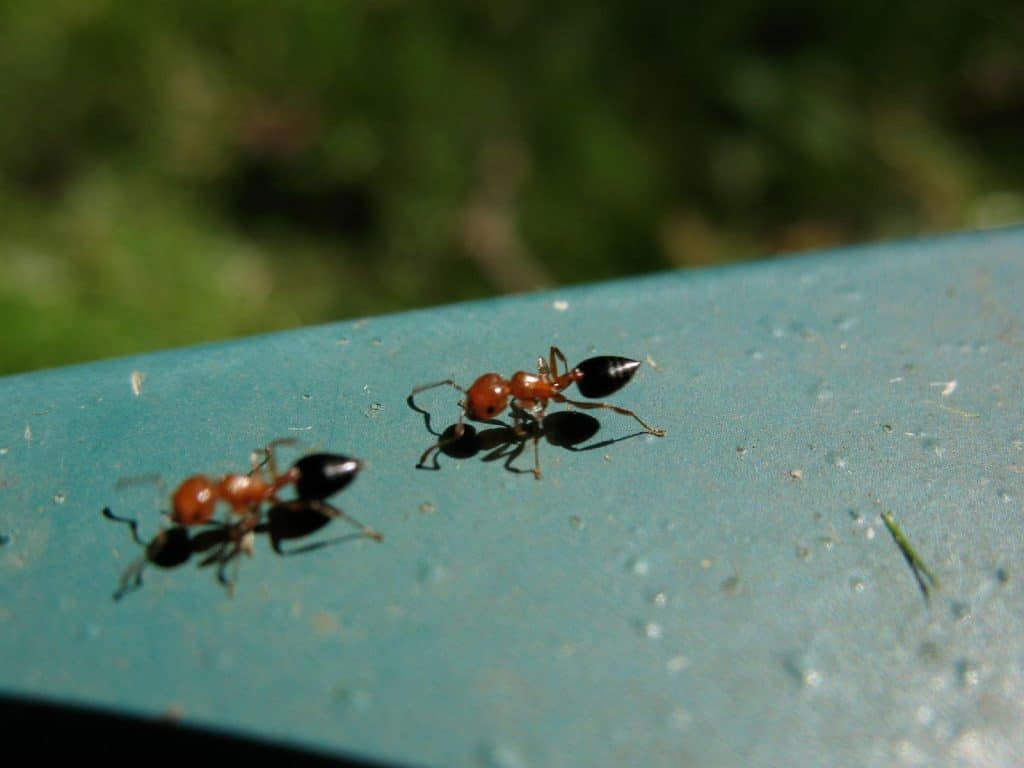
They can grow in size to between 1/8” and 3/8”. The Queen fire ant is fairly large and has wings it uses while mating. Fire ants are usually present in swarms and stick to the surroundings of their mound. It is less likely to find a stray fire ant.
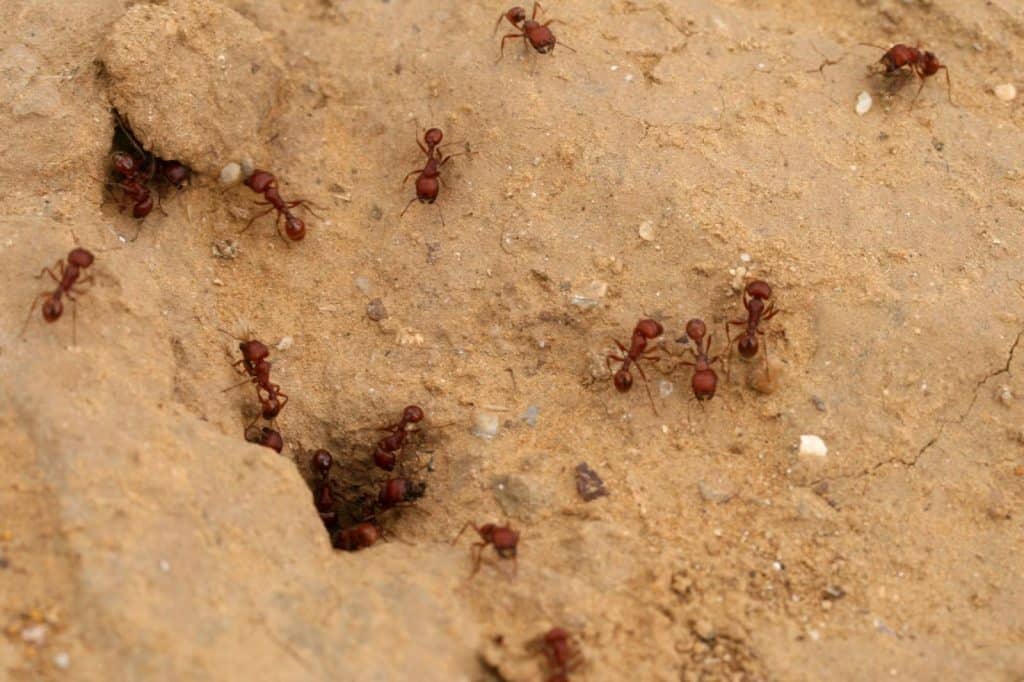
Fire ant colonies can be identified by their size. Their mounds can be as tall as 24 inches. You won’t find mounds in well-maintained regions more compacted than natural soil.
You can find fire ant mounds in tree stumps, hollow logs, and uprooted trees. You don’t often find fire ant mounds in highly-populated areas, but if fire ants are building near humans, they will usually build their nests under buildings.
The dry and warm space away from sunlight creates the optimal conditions for fire ants to breed, raise larvae, and work. The real issue is when the ants slowly break into a building and start infesting it.
It is important to keep AC systems clean and regularly checked as they often enter through them.
Bites
Those who fire ants have bitten know exactly how agonizing the fire ant stings can be.
Fire ants are dangerous to both animals and humans. Their bites are so painful that they can temporarily render the wounded region paralyzed and affect blood flow.
While they aren’t fatal in most cases, those who are allergic to fire ants, or the chemical composition of their bites, need to stay extra vigilant. A fire ant bite to an allergic individual can result in anaphylactic shock. One of the substances released by the fire ant is Alkaloid venom, a natural irritant to the skin.
If you experience nausea, excessive sweating, severe itching, or a burning sensation around the bite, you need to visit a doctor immediately. A bite might even lead to scars.
If you are attacked by a swarm of fire ants, each of them biting you, the consequences can be much worse.
What To Do When Bitten By A Fire Ant
When first bitten by a fire ant, one will experience itching and burning in and around the bite region. A white blister will likely form, requiring one to two weeks to fully heal. Do not itch the site of the bite since it can lead to scarring.
The best way to approach a fire ant bite is by applying something cold to the bitten region. This will help reduce the swelling and burning.
It is recommended to apply Hydrocortisone cream to the affected area twice a day to speed up healing and prevent an infection or rash from developing. Antihistamines work for mild allergies.
However, you should consult a doctor immediately if you experience any extreme symptoms, such as nausea, fatigue, breathlessness, or numbness in the affected region.
If the wound does not heal within a few weeks, you should check in with your doctor again.

Indoor Prevention for Fire Ant Infestation
There are many simple things one can do to control fire ants from infesting your indoor area. One easy measure to take is to avoid leaving exposed food outside. Exposed food easily attracts fire ants.
An indicator of a building infestation is chipped wooden floors or debris near expansion joints. The red imported fire ant will make their way inside a building if they already have a mound underneath the building or if there is one located somewhere outside.
If there is a complete infestation, the only way to get rid of the fire ants is by calling in a professional.
If just a few ants are making their way inside, then the goal is to minimize the chances of getting bitten while you deal with them.
You can use indoor space-friendly pesticides and insecticides. The North Carolina Agricultural Chemicals Manual mentions a few that are safe for use.
The best way to prevent fire ant infestations is to get the outdoor mounds under control before the ants slowly make their way inside.
Outdoor Prevention
It is harder to control fire ants outside than inside. Mounds in natural spaces such as forests should be left untouched. However, mounds in public spaces such as parks must be tended to.
The Integrated Pest Management in North Carolina undertakes this task.
For regions near your house, the best way to prevent a colony from establishing itself is by ensuring the space remains clean. This includes not leaving open garbage outside, regularly cleaning dumpster regions, and maintaining low-level grass and shrubs. If you notice a mound building, call pest services to get rid of it.
Final Thoughts
Fire ants are not to be taken lightly. Fire ants in their natural habitats aren’t a bother to humans, but once they make their way into homes and public spaces, they can be a real issue.
The key is to stay proactive about maintenance and call pest services when necessary. It is also important to know the basics of treating a fire ant bite if the need arises.
Recommended Reading: