
Missouri is home to various ants, but fire ants aren’t one of them. Fire ants require very specific conditions to breed to build their colony. Warm and dry weather is best suited for these ants.
Missouri’s cold winters tend to drive out fire ants, but many other types of ants present are equally dangerous and similar to fire ants.
This article will cover everything about fire ants in Missouri, from their habitats to infestation prevention methods.
Are There Red Imported Fire Ants In Missouri?
Fire ants and other insects were unintentionally introduced to many southern states and originated from South America. This could have happened through landscaping plants purchased from there and transported using cargo ships or other means.
While the states surrounding Missouri deal with infestation issues, Missouri doesn’t, primarily due to the cold climate.
Missouri’s harsh and cold winters are why fire ants are not common. Fire ants prefer warmer conditions that are dry and not humid. While the summer may be relatively warm, fire ants tend to avoid the state altogether rather than migrate between seasons.
Ants are not migratory animals. However, fire ants are quite common in the nearby states, and some even face severe infestation issues.

Cold springs lead to hay shortage, and Missouri relies on its neighbors for supply. During the summers, hay is imported into Missouri from the southern states. Haystacks from these southern states may harbor fire ants. Usually, for hay that needs to be shipped out of states within a certain jurisdiction, the USDA must inspect and approve it.
Despite the quarantining and inspection, it so happens that a few fire ants make their way into the haystacks. Open food sources can bait the bugs and draw them out of the hay. If any fire ants are found, then the Missouri insect regulation department needs to be contacted.
This avoids the potential risk of a few ants making their way into a house. While for a full new colony to grow and a mound to be built, it may take a few weeks, there is the chance of one or two ants making their way into other infrastructures.
What Other Ants Can Be Found In Missouri?
Fire ants aren’t a major public or environmental concern for Missouri. However, there are many other similar ant types native to the state that has been quite an issue for property owners in Missouri. These ants are similar in appearance, the strength of bite, treatment, and prevention methods.
The prevention methods discussed later on can more or less be used for all types of infestations. Treatment methods may sometimes differ, so it is better to consult a doctor irrespective of the ant type.
Ants found in Missouri include pharaoh ants, odorous house ants, pavement ants, field ants, carpenter ants, and small honey ants. Most of these ants are similar in color and size but can be distinguished from one another if you are familiar with the different types.
The mentioned ants, irrespective of where they set up their mounds, find ways to make it inside homes in Missouri. State insect and maintenance agencies of Missouri deal with ant mounds in public, but home and property owners take measures to prevent infestations.
Habitat And Identification
Fire ants are usually of the size 1/8” to 3/8” and have a reddish-brown color with a distinctive stinger. They also have long and distinguishable antennas alongside an elongated but round body. See How To Identify Fire Ants
The Queen is significantly larger than the worker ants and has wings that it uses while mating. As mentioned before, fire ants prefer warm and dry spaces and rarely spread out to regions that don’t meet these conditions.
Fire ants stick to their mound and surroundings like all other ant colonies. They don’t stray from their mound, so a single ant nearby indicates a closeby mound.
Fire ant mounds are easy to find in natural spaces such as forests and near trees, where they can use soil to construct their mound. Hollow logs, tree stumps, and exposed roots are just some of the many places where there is a high possibility of a fire ant mound existing.
Human-populated regions where hard concrete takes the place of soil are not somewhere fire ants build their mounds. However, public parks and buildings underneath are some places where you can find colonies.
Indoor And Outdoor Prevention for the Red Imported Fire Ant
Outdoor prevention begins with keeping public spaces such as parks clean and free of open garbage. It is, of course, harder to maintain outdoor spaces than indoor ones.
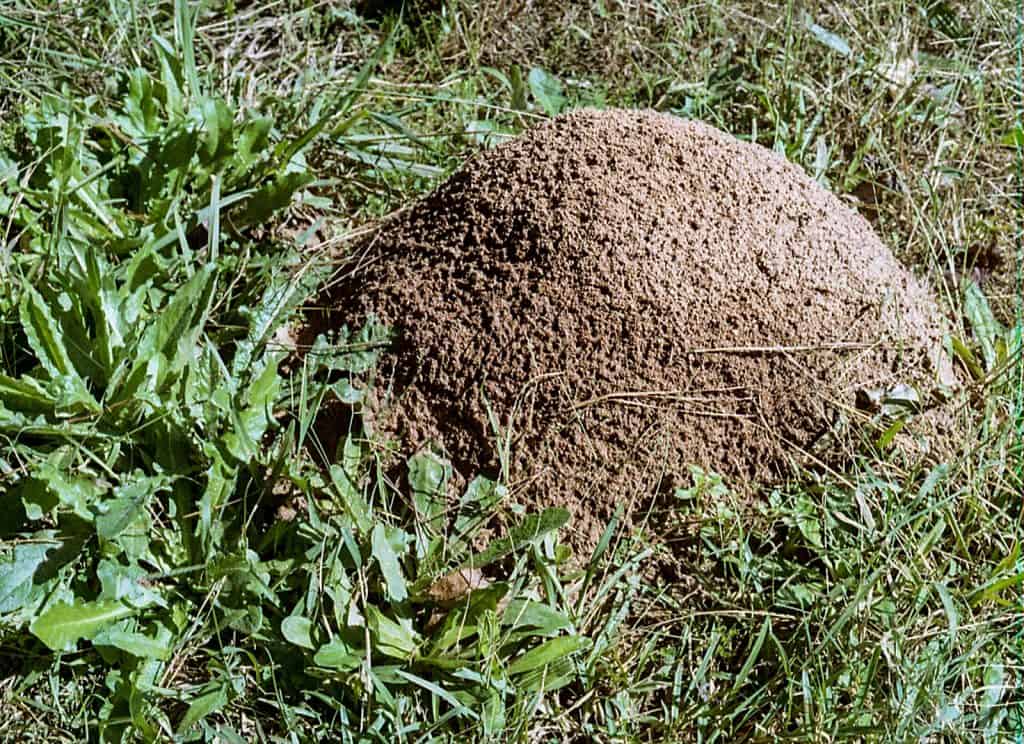
Mounds and colonies found in their natural habitat are usually left unbothered. The Missouri Department of Conservation takes on this responsibility.
To prevent infestation of buildings, it is made sure that there are no mounds in the surroundings. The space in and around infrastructures is clean and free of open food and trash.
Lawns and shrubs are maintained at a short height to prevent fire ants from inhabiting them. Many people also use indoor-friendly and FDA-approved fire ant pesticides or repellents in their homes.
Final Thoughts
Fire ants are not a major threat to human and animal life in Missouri. There are, however, many other types of ants one needs to be on the lookout for.
As long as these ants do not infest buildings and stick to their natural habitats, there is no need to fret over fire ants. Knowing how to treat a fire ant bite is recommended if the need arises.
Recommended Reading: