
Fire ants are one of the most annoying and dangerous insects that spread quickly and easily. These poisonous insects cause pain and burning sensation to their victims, which may result in red bumps forming at the sting that becomes white fluid-filled pustules within only a day or two. They can even cause life-threatening reactions in some cases.
Half the battle of knowing how to keep fire ants at bay is figuring out how they spread. With this in mind, read on as I cover everything you need to know about fire ants—their history, colonies, mounds, spread, diet, control, and more!
Fire Ants History: How Everything Started
The first time Imported fire ants were introduced (by accident) to the US was in the 1930s. These invasive insects are often found in the humid Southeastern United States because they need a good food source and some moisture to survive.
But they managed to spread north and west where there wasn’t much water. Native fire ants like to live in the dry southwest United States and northern Mexico.
See our detailed article How Did Fire Ants Get To America?
Fire Ants Colonies
In the fire ant world, colonies often move from one location to another, and the queen requires only half a dozen workers to establish a new colony. You can find a single queen or several queens in imported fire ant colonies.
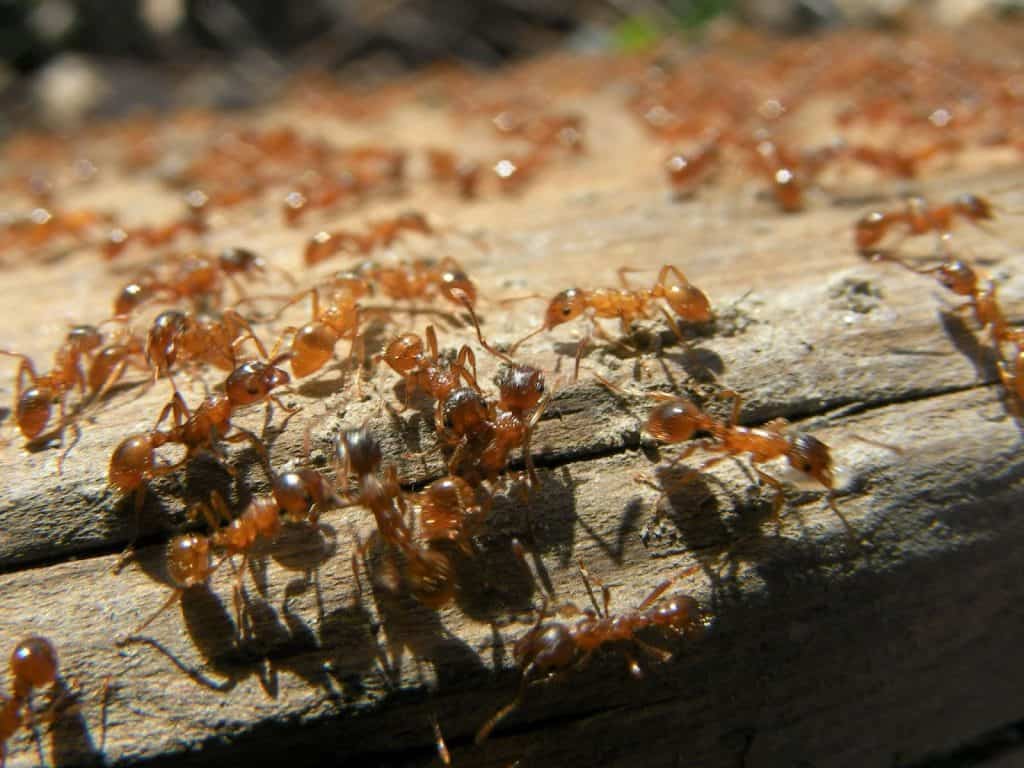
Due to their territorial nature, single-queen colonies may contain a maximum of 150 mounds that contain seven million ants per acre. One acre of a multiple-queen colony may support up to 300 mounds that contain forty million ants! On the other hand, colonies with several queens are more tolerant of other colonies nearby and tend to share and exchange resources.
Fire Ants Mounds
As annoying as they are, fire ants are hard-working insects that make mound-shaped nests by tunneling into the earth. They can build their nests in nearly any type of soil. However, they prefer sunny and open areas like meadows, lawns, golf courses, pastures, parks, playgrounds, and other wilderness and agricultural areas.
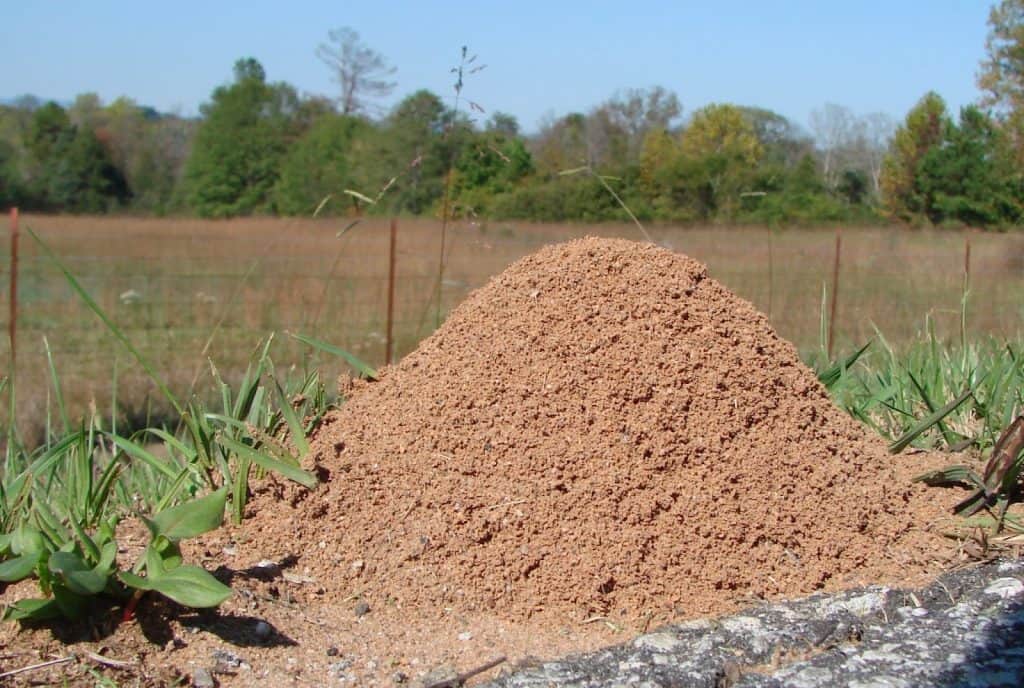
You know there are fire ants in an area when you see mounds, but this is not always the case.
Fire ants get into their nests through tunnels that can reach several feet or beyond the mound—they don’t have nest entry on the mound itself, unlike other types of ants. Surprisingly, a mound is not required for the survival of fire ants, even though it is the most obvious indication of their presence.
Colonies often relocate deeper into the ground when it’s too hot and dry, and depending on the soil and weather, new colonies can take months to build a noticeable mound.
Fire Ants Spread
Fire ants can spread both artificially and naturally. Here’s how they spread artificially:
- When newly-mated queens are transported through vehicles on which they have landed.
- When mated, queens or colonies are transported through infested sod, nursery stock, hay, or beehives.
- When people move dirty machinery that’s been used to move restricted materials.
- When people move containers that have been used with organic materials like potted plants
For these reasons, materials that harbor fire ants, like sod, hay, and nursery stock, should be certified as fire ant-free before selling outside the ant quarantine area.
How they spread naturally:
- When the rafts and balls of a flooded colony float to other locations.
- When newly-mated queens fly or are carried by the wind to new areas—winged fire ants can travel great distances when blown by wind currents.
- The process through which fire ant colonies with several queens establish new colonies is known as bud off, which fire ants employ to spread naturally.
Fire Ants Diet
Boasting strong jaws or mandibles that bite and secure their prey, fire ants never get tired of hunting! Their abdomens are equipped with venomous stingers that can sting numerous times while injecting poison into victims, paralyzing and killing animals much bigger than they are.
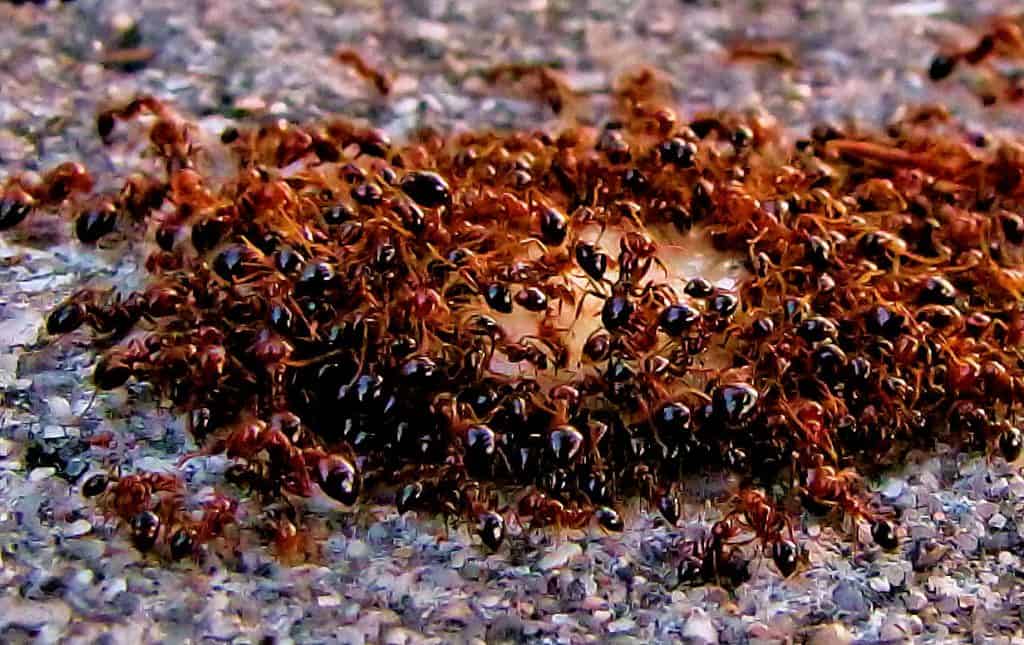
Plants, invertebrates, microscopic organisms, and vertebrates, including mammals, reptiles, and birds, are among the foods fire ants like. Fire ants also occasionally eat other pests.
After finding edible food, scavengers return to the nest with the bounty and share it with the rest of the ants in the colony, including the queen, developing reproductives, larvae, and other workers.
Fire ants are one of the most dominant predatory insects in areas of fire ant infestation in the southern United States.
The predatory behavior of fire ants can be beneficial when they prey on boll weevils and ticks. But in other cases, this food-seeking behavior can seriously threaten the ecosystem when they prey on songbirds or endangered species.
And there’s no doubt that infestation of new areas will harm plant and animal life.
For more information, see What Do Fire Ants Eat? (You May Be Surprised!)
Fire Ants Control: It’s Easier than You Think!
Now that you understand the enemy, here are three effective methods to kill it:
1. Pesticides
Drenching the fire ant mound with a liquid pesticide is one of the simplest and most effective ways to eliminate the fire ant problem. The best thing about pesticides is that they’re specially made to get really deep into the ant pile, unlike other non-chemical ‘remedies.’
You should make at least 2-3 gallons of solution and use it to drench the ant pile because liquid products are frequently extremely concentrated.
2. Ant Bait
If you’re sick and tired of trying ineffective remedies to get rid of fire ants, you may want to try fire ant bait products, which are highly recommended by many experts owing to their effectiveness. Ant bait is a mixture of ant food and a slow-acting poison. This bait is taken by worker ants, which you see out and about, and brought back to the colony to share.
Using an ant bait product is unlike other treatments since fire ants mistake the bait for food, taking it back to the mound to share with their other ants, and the queens are no exception!
Although it’s not a quick fix, great things take time, and placing ant bait around a mound or in places where fire ants are hidden is a safe and effective method to get rid of these little suckers once and for all!
3. Pest Control Professional
Unlike normal people who try to kill fire ants on their property, professional exterminators know exactly what they do, and they’ve probably been killing ants for many years.
Additionally, they have access to strong and effective insecticides, unlike those sold over the counter. There are some potent products that only a licensed professional can use due to the risk they pose to both the environment and human health.
So, if you don’t want to deal with the hassle of killing thousands of fire ants, just get a certified applicator to do the work for you!
Recommended Reading: