
Ever wondered how long carpenter ants live? Read ahead to learn about the life cycle of carpenter ants and some related facts.
Without further ado, let’s dive right in and expand your knowledge to increase your understanding of these wood-damaging critters.
The Lifespan of Carpenter Ants
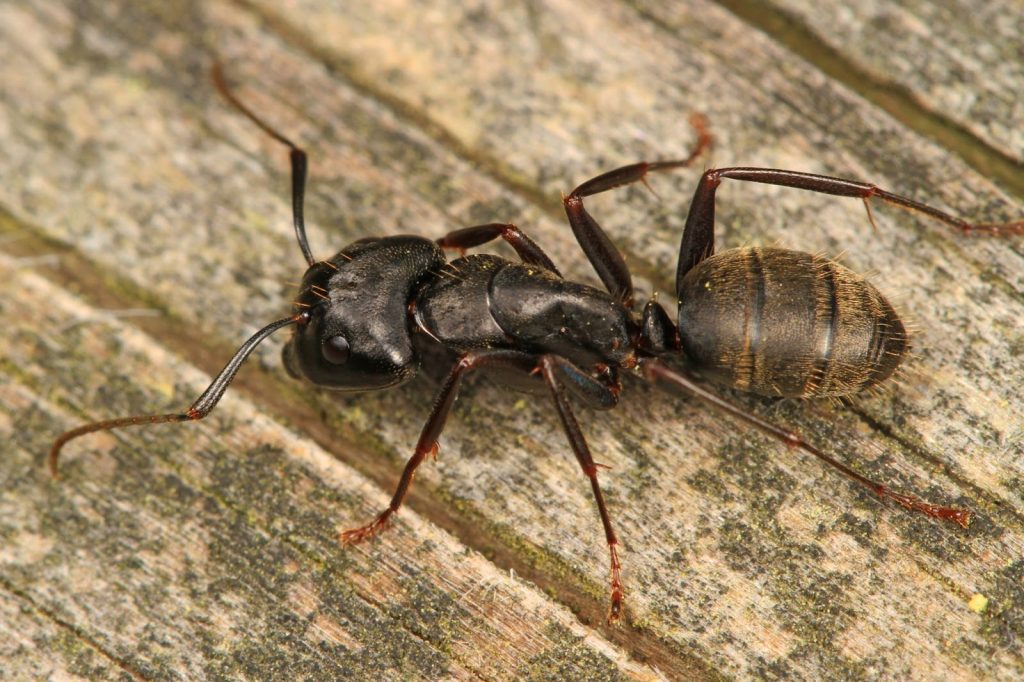
These ants live a long time — seven to ten years, to be exact. However, this is an average and varies greatly. The worker ants focus on keeping their colony alive and thriving and have the shortest life.
The male ants live about one week, while ant queens are reported to live more than 15 years and, in some recorded cases, up to 28 years.
The life cycle of a carpenter ant starts with the nuptial flight, where the winged male or queen looks for a new area to colonize. This occurs during the late spring and early summer seasons. A colony only produces winged ants when their numbers reach a few thousand.
The winged males will mate with the queen and die within weeks. The mating process occurs mid-air, after which the female sheds its wings. The queen then locates a feasible space or creates a small wooden cavity, sealing herself in until her broods become adults.
Initially, the ant will only lay a few eggs, let the eggs hatch, and tend to the hatchlings while feeding them with her salivary glands until they are big enough to take the role of worker ants and start expanding the nest for further replication.
It takes around two to six years to become a large colony. Only the queen ant fed the initial broods at the start of the settlement. Every hatchling after the initial expansion is taken care of and raised by worker ants instead.
The workers will continuously expand by creating tunnels and caves, gathering food, and feeding young broods. The ant colony can produce several hundred winged ants throughout the summer, which will hibernate in the colony during the entire cold season and leave the nest during spring.
The cycle keeps repeating itself, forming new colonies and expanding their population.
Worker Ants Activities During the Winter
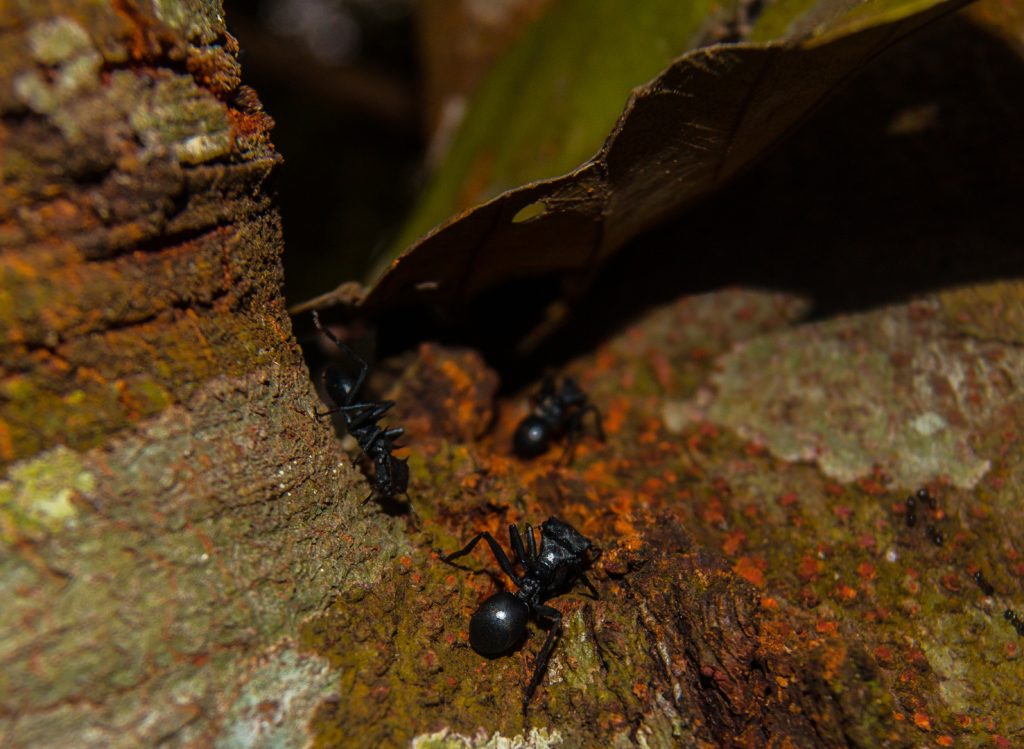
Moist wood is the carpenter ant’s favorite spot to infest. Besides making nests in decaying tree stumps, these worker carpenter ants build nests inside wall cracks, under floorboards, and around concealed drains. In the ant life cycle, winters are for hibernation.
See Where Do Carpenter Ants Go In The Winter?
However, if there’s an ant colony living indoors, you’ll most probably see off-season ant movement. The warm indoor temperatures can keep them active. If there’s off-season activity, your home has a well-established colony waiting for spring to infest other areas.
See When Are Carpenter Ants Most Active?
Ant Roles and Colonies
When it comes to this ant species, a carpenter ant’s life cycle is 60 days, from eggs to adults. When you see any movement, you’ll notice a size difference. This difference comes from the different broods produced by queen ants having differences of a few days.
Worker ants are the backbone of a colony. Besides digging burrows and expanding the nest, the worker ants tend to the larvae and forage food to feed the entire carpenter ant colony. The female ants find the site to build these ant colonies.
Where Do Carpenter Ants Prefer Living?
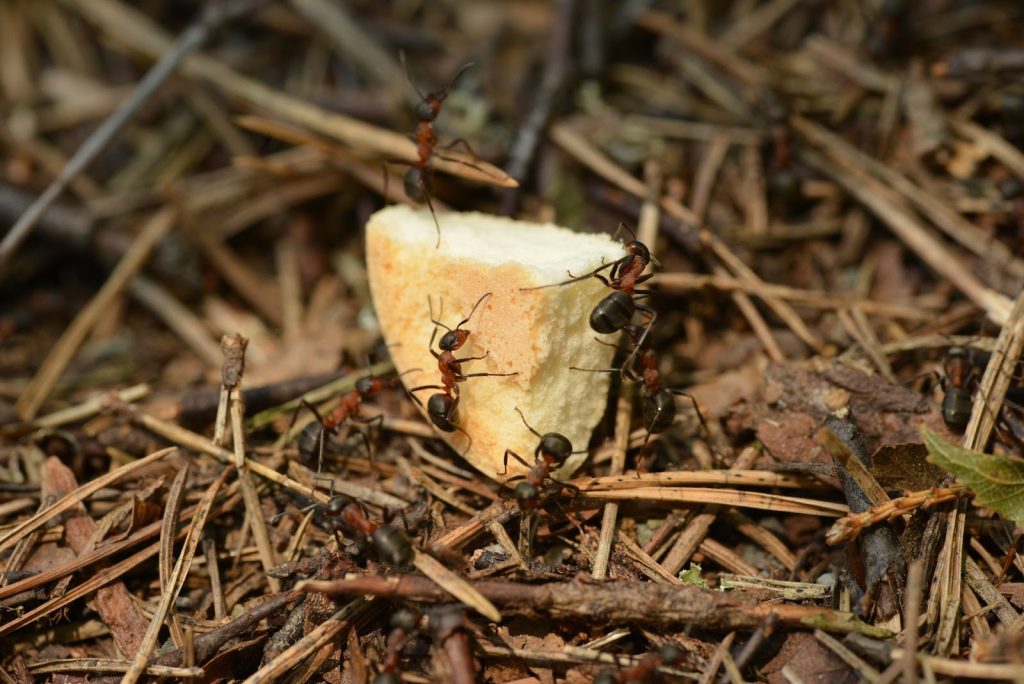
Here’s a quick list highlighting potential places where carpenter ants live and thrive.
- Moist soil in the garden, inside rotten stumps, and trees.
- Damp wooden structures, cracked walls, inside wooden doors and windows, and support structures used in the foundation.
- Underneath the flooring, sidewalk, or pavement where moisture accumulates.
- Plants and trees with growing fungus or honeydew left by aphids.
How To Reduce Moisture Indoors
We all know carpenter ants require moisture and a food source to flourish. Keeping the humidity at bay prevents the ants from settling in.
- Keep the basement and attic crawl space ventilated by installing exhaust fans.
- Fix any plumbing leaks in the foundation, within walls, joints, and fixtures.
- In the crawl space of your basement, cover around 80% of the surface with a poly sheet to prevent the soil from absorbing moisture.
- If the indoors remain damp, consider using a dehumidifier to control the humidity levels. A constant spike in humidity results in wooden furniture, doors, cabinets, and windows absorbing the moisture, creating a sweet spot for these critters to live in.
- Sealing cracks in the foundation, walls, and roofing prevents ants from getting in the first place.
- Applying weather stripping beneath windows and doors to prevent easy access.
- Trimming tree branches and twigs coming in contact with the outdoor walls or the roof. These tree branches act as a pathway for the ants, allowing them to get indoors quickly.
Insecticide Options to Kill Carpenter Ants
If you fail to control the ant population using the methods mentioned above, step up the game and use insecticides for complete eradication.
Besides using the required safety gear, applying some of the insecticides mentioned will require a pest control specialist. Therefore, it’s wise to call in a professional or take suggestions on how to approach the issue.
- Drilling holes in the infested wood and applying insecticidal aerosol formulations or dust to eradicate the ant nest.
- Replacing worn-out and weakened wooden structures.
- Applying insulation after using insecticides to prevent further spread.
- Using insecticidal barrier treatments around the premises to prevent ants from coming in.
- Ant baits are quite an effective control method as they contain poisonous materials that can kill them.
Spraying the ants outside their nest will do no good. It’s crucial to locate the nesting grounds before using any insecticidal methods. For people who want to avoid using chemicals, several natural remedies like borax, dichotomous earth, pouring boiling water, and a mix of soapy or vinegar water will work.
Conclusion
Carpenter ants are a significant cog in our ecosystem and should only be controlled when causing property damage. If you see ants wandering around the household, especially in unexpected places like the pantry cabinets or from inside cracks, you can use these eradication methods.
Nevertheless, calling in a certified pest control inspector ensures every colony within the premises is dealt with, resolving the infestation issue for good.
Recommended Reading: