
Squirrels twitch their tails for various reasons.
One of the main reasons is to communicate with other squirrels. The tail twitch can be a sign of aggression or communicate danger.
Squirrels also twitch their tails when feeling threatened to try and make themselves look bigger and more intimidating. Moreover, squirrels can twitch their tails when foraging for food or attracting mates.
Finally, squirrels shake their tails when grooming themselves to distribute oils from their skin and keep their fur clean and healthy.
Let’s learn more about squirrels and common squirrel behaviors.
What Do Squirrels Use Their Tails For?
Squirrels use their tails for many purposes.
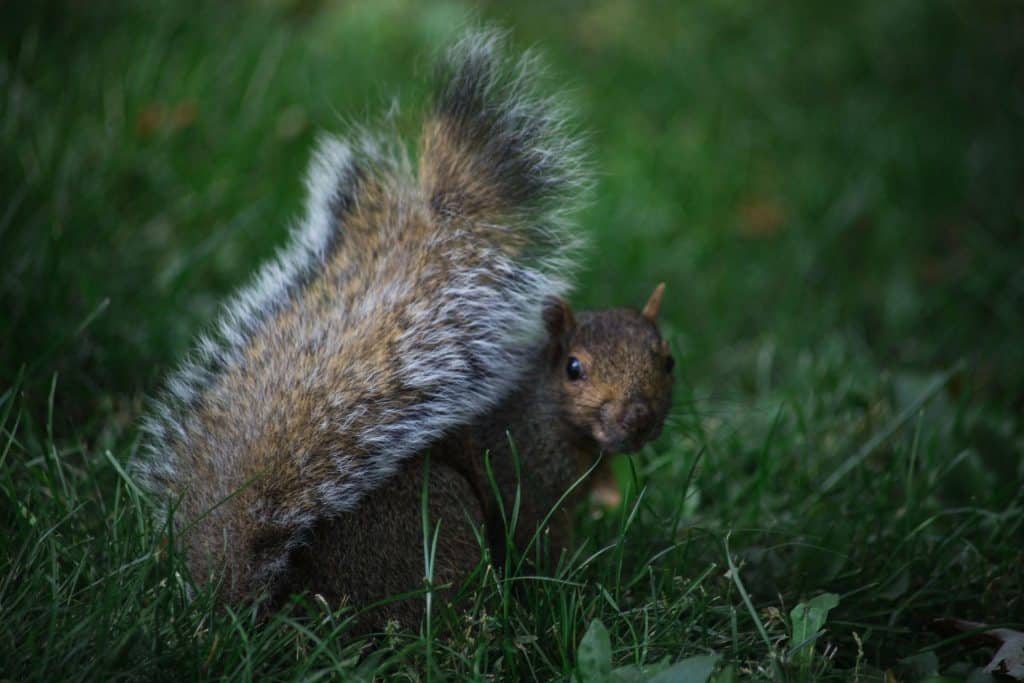
One of the primary functions of a squirrel’s tail is to maintain balance while climbing and running through trees and narrow branches. The tail is also used as a rudder when the squirrel jumps from branch to branch, enabling it to steer and land safely.
In addition to helping with physical movement, squirrels also use their tails to communicate.
Tail twitching can be done in various ways to convey different messages to other squirrels. For example, a rapidly twitching tail of a mother squirrel can be a sign of aggression, while a slowly waving tail can be a sign of submission.
Finally, these wild animals use their tails to regulate their body temperature.
In cold weather, many squirrels will fluff out their tails to create an insulating layer of air around their bodies, helping to keep them warm. In hot weather, squirrels will use their tails to cool off by holding them out from their bodies to allow heat to dissipate.
Do Squirrels Wag Their Tails When Happy?
Squirrels flick their tails when they are happy or excited. This behavior is similar to how dogs wag their tails when they are happy or excited.
In squirrels, tail wagging can also signify agitation or nervousness. When a female or male squirrel is feeling threatened, it may wag its tail rapidly as a way of trying to deter predators.
Why Do Squirrels Curl Their Tails Over Their Backs?
Squirrels curl their tails over their backs for a variety of reasons.
One reason is to communicate with other squirrels. By curling their tails over their backs, squirrels can signal to other squirrels that they are friendly and non-threatening.
Squirrels also curl their tails over their backs when resting or sleeping; this helps keep their bodies warm and insulated, as the rear provides an extra layer of protection against the cold.
Finally, red squirrels and other species may curl their tails over their backs to balance while climbing trees or other structures during mating season.
Why Are Some Squirrels Tails Not Fluffy?
Some squirrels have tails that aren’t as fluffy as others because they may be young, sick, or have a genetic variation that causes their tails to be less thick.
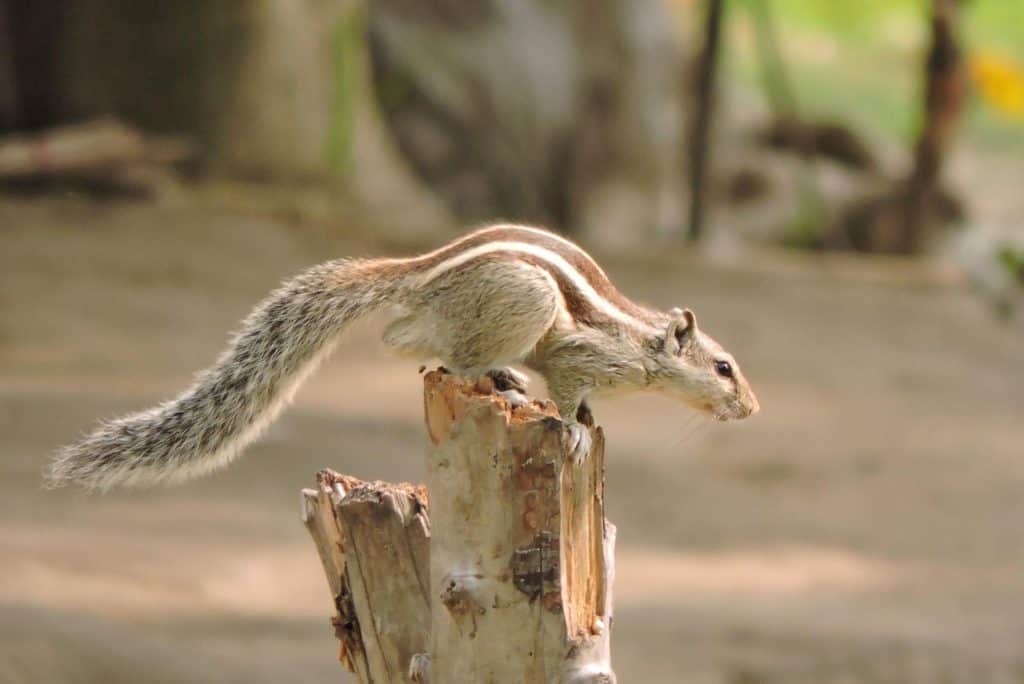
Young squirrels, in particular, tend to have thinner tails because they haven’t yet reached full maturity. As a squirrel grows and develops, its tail will become thicker and fuller.
Sick squirrels with a poor diet may also have thinner tails because they’re not getting the necessary nutrients to support healthy fur growth.
Finally, some squirrels may have a genetic variation that causes their tails to be less thick and fluffy.
Like humans, there’s a wide range of variation in physical traits among different individuals within a species, including the thickness and fullness of a squirrel’s tail.
Can Squirrels Lose Their Tail?
Squirrels can lose their tail; this can happen in different ways, such as the following:
Squirrels defend their territory aggressively and may sometimes get into physical altercations with other squirrels or predators. For example, a squirrel’s tail may be damaged or lost in a fight with another animal. If a squirrel is bitten or clawed on its tail, it may lose part or all of its tail.
A squirrel’s tail may also be damaged or lost accidentally. For example, if a squirrel gets its tail stuck in a door or window, it could sustain injuries resulting in the tail’s loss.
Finally, disease or malnutrition can make a squirrel’s tail fall off. If a squirrel isn’t getting the proper nutrition or is suffering from an illness that affects its fur, it may lose its tail.
Can Squirrels Live Without a Tail?
Squirrels can live without a tail, but it wouldn’t be easy; their tails serve many functions.
For example, the tail helps to keep the squirrel warm in cold weather by providing an extra layer of insulation. It also helps the squirrel balance when climbing trees and other structures and is used to communicate with other squirrels.
If a squirrel loses its tail, it may have difficulty regulating its body temperature and may be more prone to cold-related illness.
It may also have difficulty climbing and maneuvering through the branches, which could make it more vulnerable to predators.
Generally, a squirrel should have a tail to function and thrive in its natural habitat.

Squirrel Tail Facts
Here’s a list of interesting facts about squirrel tails:
- Squirrels have long, bushy tails covered in fur. These tails help to keep the squirrel warm in cold weather and provide insulation against the elements.
- Squirrels use their tails for balance when climbing trees or other structures. The bottom acts like a rudder, helping the squirrel maintain balance and maneuver through the branches.
- Squirrels can also use their tails to communicate with other squirrels. By waving or twitching their tails, squirrels can signal to other squirrels that they’re friendly or non-threatening.
- Some species of squirrels, such as fox squirrels, have particularly large and bushy tails. These tails can be as long as their bodies, and they’re used as camouflage when the squirrel is resting in the branches of a tree.
- Different species of squirrels have tails in different colors. Some squirrels, such as the eastern gray squirrel, have mostly gray tails. Other squirrels, such as the red squirrel, have reddish-brown tails.
- When scared, a squirrel stares at its surroundings and twitches its tail.
Recommended Reading: